Electric glass-tops in the plats, gas in the remodels, propane up the foothill lanes — one posted figure from $285, with the supply metered before any component is accused.
Mon–Fri 8 AM – 6 PM · warranty on parts and workmanship, printed on the ticket
Symptom by symptom, the bench reading walks the cheap suspects before the dear ones — and writes down what it proves.
| What the House Reports | What the Reading Usually Shows |
|---|---|
| Oven stone cold, panel bright | Bake element gone open, an igniter too weak to prove itself, or a thermal fuse — metered in cost order |
| Burner dead or clicking endlessly | Corroded terminals doing a dead-element impression, a wet igniter after a spill, or a switch — cheap first |
| Bakes drifting off the recipe | A sensor lying by a few degrees — proven against a reference thermometer through one full bake |
| Propane range burning lazy orange | Air-fuel mix or regulator behavior — watched live, with the tank side referred to your supplier in writing |
| Glass-top zone quit mid-canning | Radiant element or its switch — the meter says which, and the ticket prints only the guilty one |
| Breaker trips when the oven lights | Element shorting to sheath or a house-side fault — sorted before any part is bought |

This county cooks on three fuels, sometimes within one mile of road. The plats around Ferndale and Blaine run electric glass-tops; the remodeled farmhouses closer to Lynden run gas; and up the Mount Baker Highway, propane carries kitchens where gas mains never arrived. The habit that serves all three is sequence: prove the supply before the controls, brighten terminals before condemning elements, and let a checked thermometer ride one complete bake before any sensor gets called dishonest. The stations differ enormously in price, which is exactly why they get walked in order.
Canning season sharpens the stakes. When the berries come in around Lynden, a range works harder in three weeks than most do in a year, and a burner that quits mid-batch is a genuine small crisis — those calls get flagged and routed with the urgency they deserve. On propane, the burner ritual — glow, valve, flame — gets watched live, with our work ending honestly at the appliance connection: everything tankward of the appliance connection remains your supplier's territory, and the ticket draws that border in ink whenever a reading crosses it.
The arithmetic is posted: from $285 for the trip, the reading and all labor, wall ovens and cooktops folding into a single visit where the kitchen has both. Elements, switches, igniters and boards print on their own lines at their own prices, signed before fitting. Verdict-only remains a respectable outcome — $92 flat, in writing.
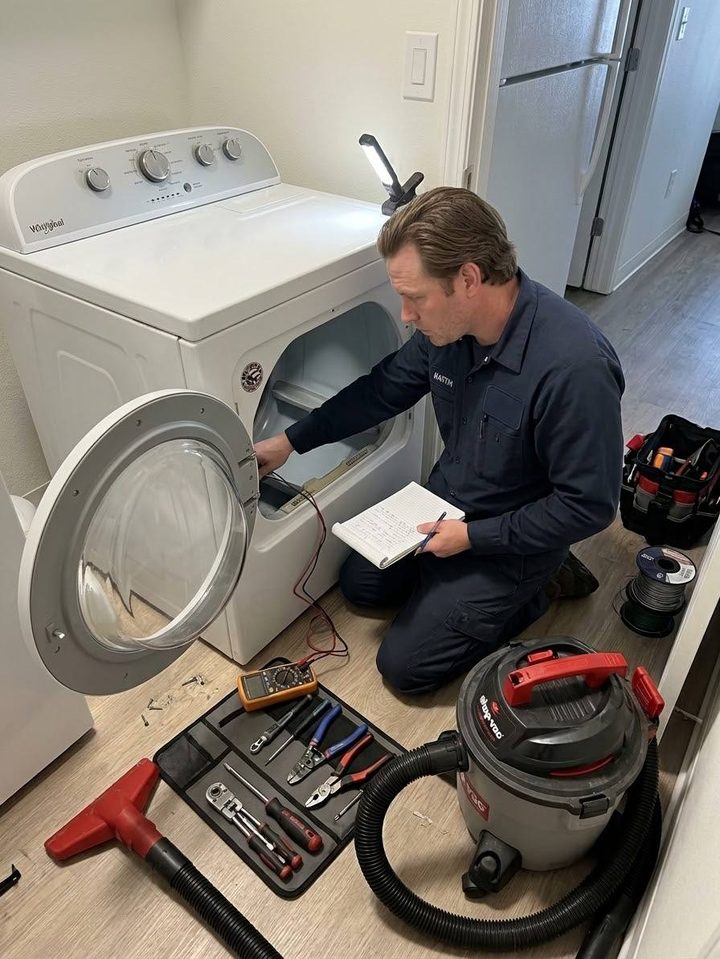
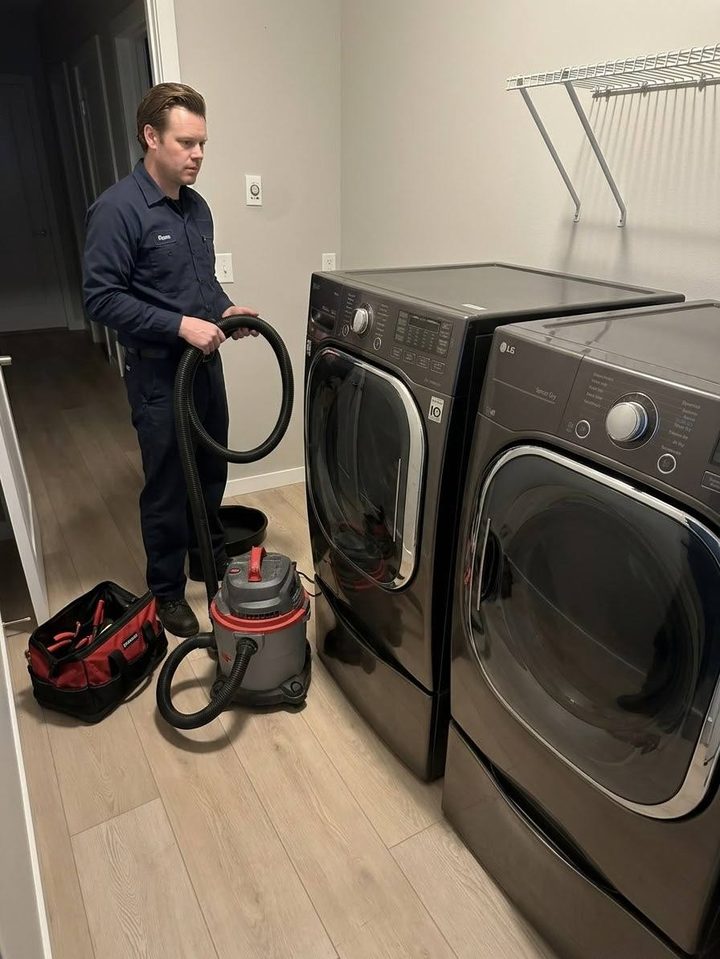
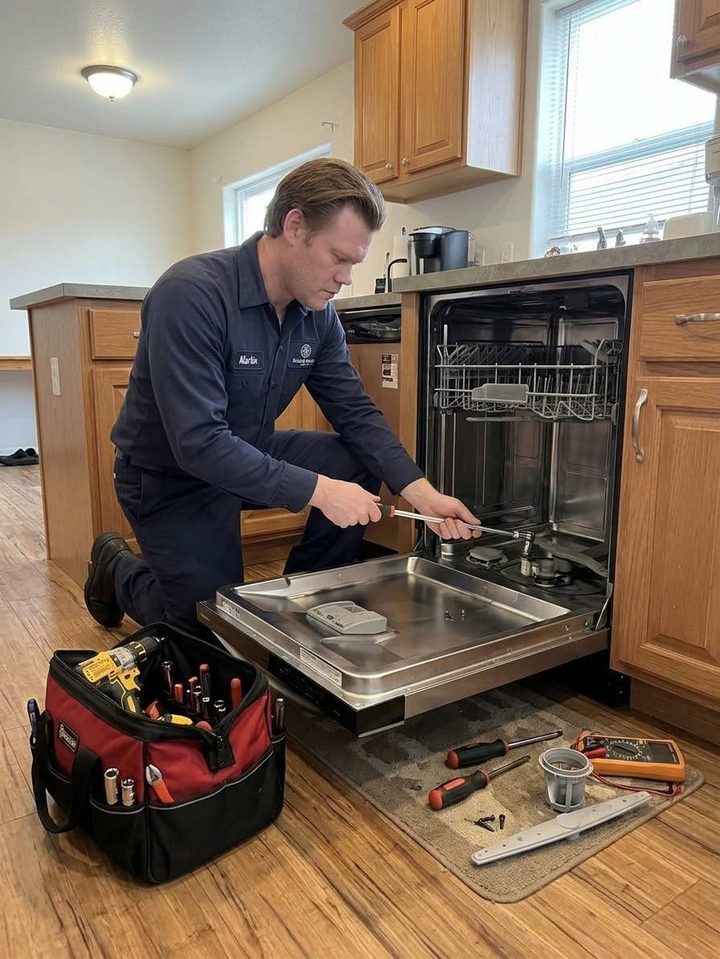
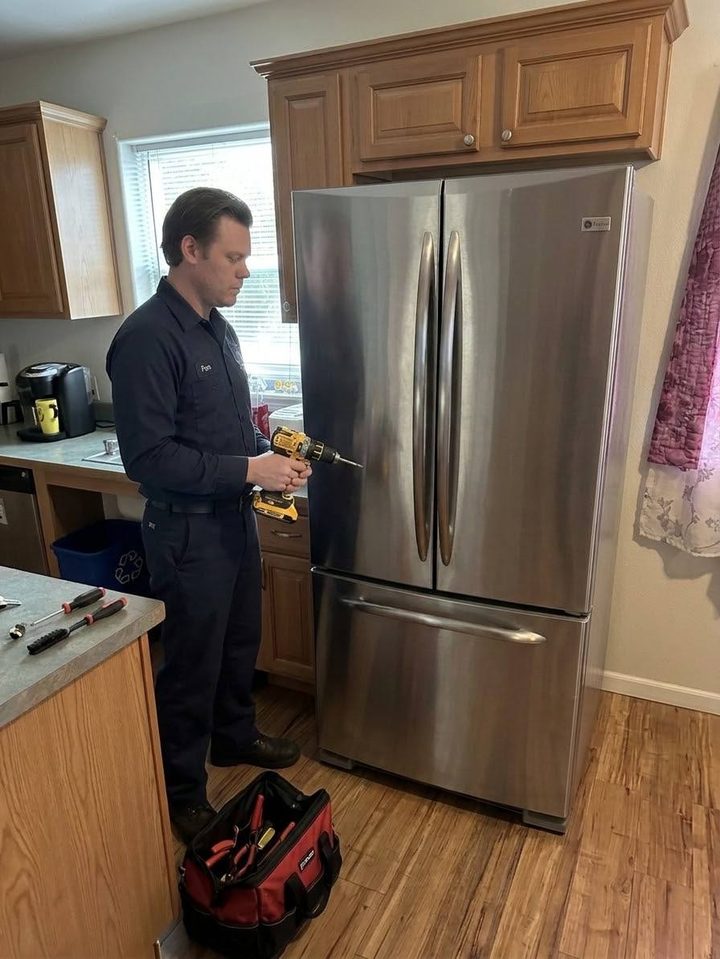
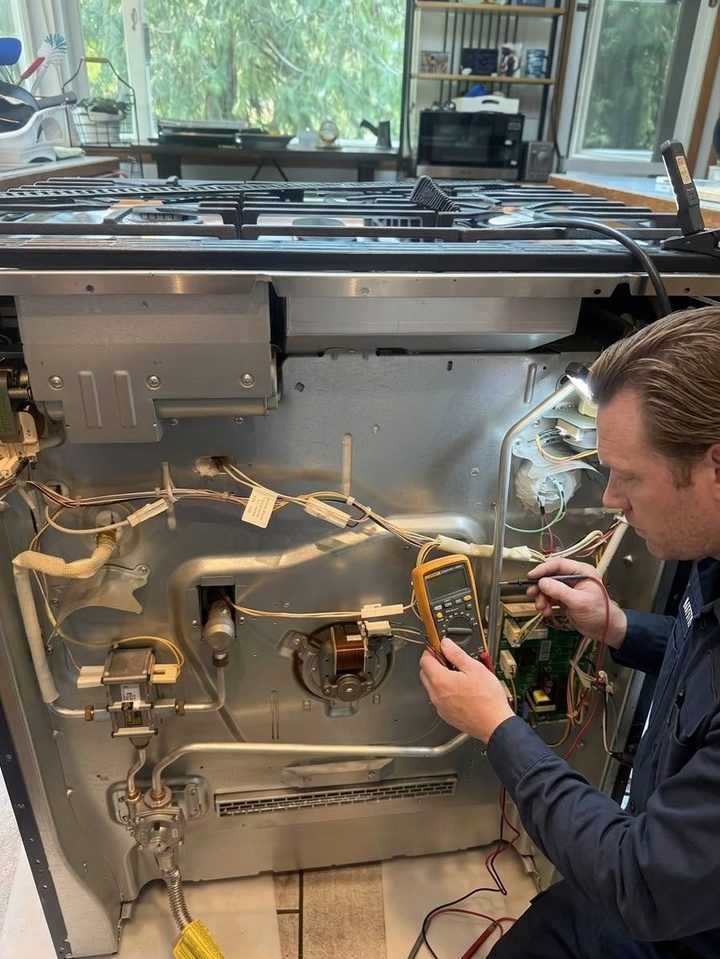
No stock imagery on order — the county's machines and the hands that service them.
Canning-season oven calls get told to say so — a dead oven under deadline is real urgency here, and the route makes room the way it does for warming refrigerators.
The foothill lanes are on the regular route, and propane appliances are ordinary work. The appliance side is ours; from the regulator back, it's your supplier's ground — marked plainly on the ticket.
Because corrosion fakes element death convincingly, and terminals cost a fraction of elements. The cheap suspect gets brightened and retested first — the least glamorous habit on the truck, and the one that erases the most hardware entries.
Usually — convection fans, sagging elements and misreading sensors all skew heat, and a thermometer pass locates which. Some spread is baked into cheaper ovens honestly; you'll hear which case is yours.
One. Both machines fold into the same posted figure and the same afternoon, and the ticket itemizes whatever parts each one proved it needed.
Book the reading — meter and thermometer settle it, and the posted figure holds whatever they find.