This county dries laundry against wet winters and busy barns, and its dryers work for a living. The exhaust gets measured before any part is blamed — from $219, everything but hardware inside the number.
Mon–Fri 8 AM – 6 PM · warranty on parts and workmanship, printed on the ticket
Reported symptom on the left, what the bench reading tends to convict on the right — cheapest suspects first, always.
| What the House Reports | What the Reading Usually Shows |
|---|---|
| Runs a full cycle, clothes still damp | Starved airflow — packed vent runs, a crushed transition hose, or a flap the last northeaster froze shut |
| No heat at all, drum still turning | An element or gas coil gone open, a tripped thermal fuse — or half a 240V feed missing at the wall |
| Thumping or screeching from the drum | Rollers and glides worn to the rim, a drum bearing announcing retirement, or a belt starting to shred |
| Shuts off before the load is dry | Cycling thermostat or moisture bars misreading — often just filmed-over bars on the sensor generation |
| Hot cabinet, burning smell | Lint migrating past the screen toward the element — a cleaning-and-airflow job before it becomes a hazard |
| Won't start, panel dark | Door switch, start relay or a control that lost its mind in the last outage — metered in that order |

Dryer work in this county starts at the wall, not the machine. Wet-season laundry runs heavy, farmhouse vent runs grow long and crooked through decades of remodels, and the coastal air out toward Blaine and Birch Bay keeps lint damp enough to pack instead of blow through. So the first instrument out of the bag is an airflow gauge: measure the exhaust, walk the vent, check the outside flap — and a healthy share of 'broken' dryers turn out to be suffocating, cured with labor already inside the posted figure and no hardware on the ticket at all.
When the machine itself is guilty, the reading names the part before money moves: elements and gas coils metered for continuity, thermostats and fuses checked in sequence, rollers and bearings judged by ear and by hand. The sensor-generation machines in Ferndale's newer plats mostly want their moisture bars cleaned and their vents proven before any board takes blame — and after a Peaceful Valley outage, the start relay gets tested first, because restoration surges kill cheap parts that imitate dear ones.
The money stays flat: from $219 buys the drive, the diagnosis and every minute of labor to done, whether that's twenty of them or the afternoon. A component lands on the ticket at shelf price and goes in behind your signature, never ahead of it. If the verdict is all you want — a machine not worth its fix gets told so in writing — $92 settles the call-out entirely.
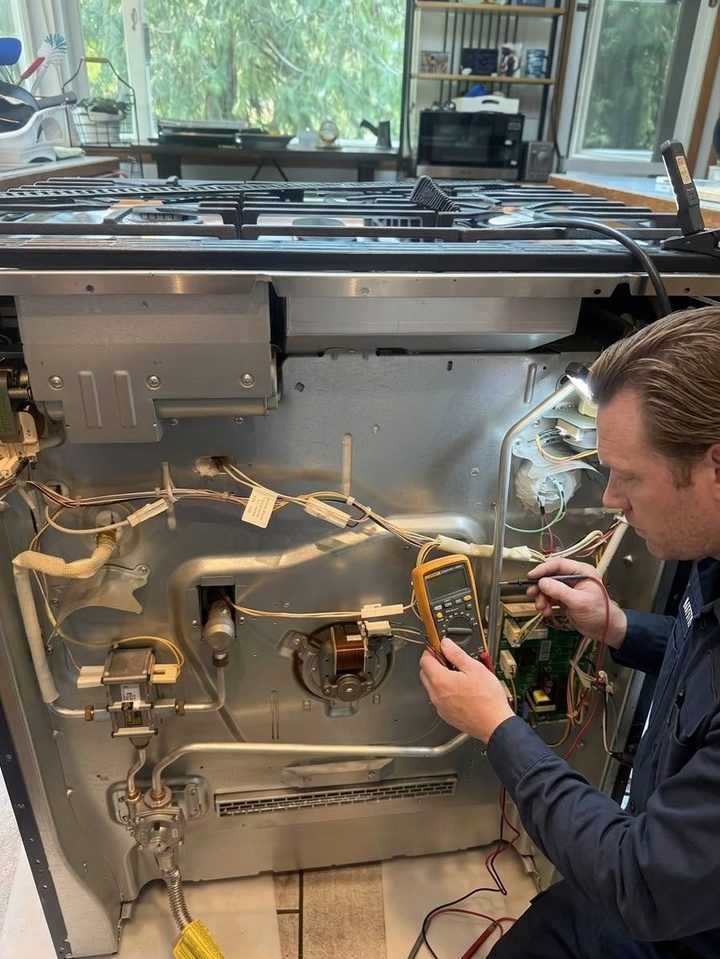
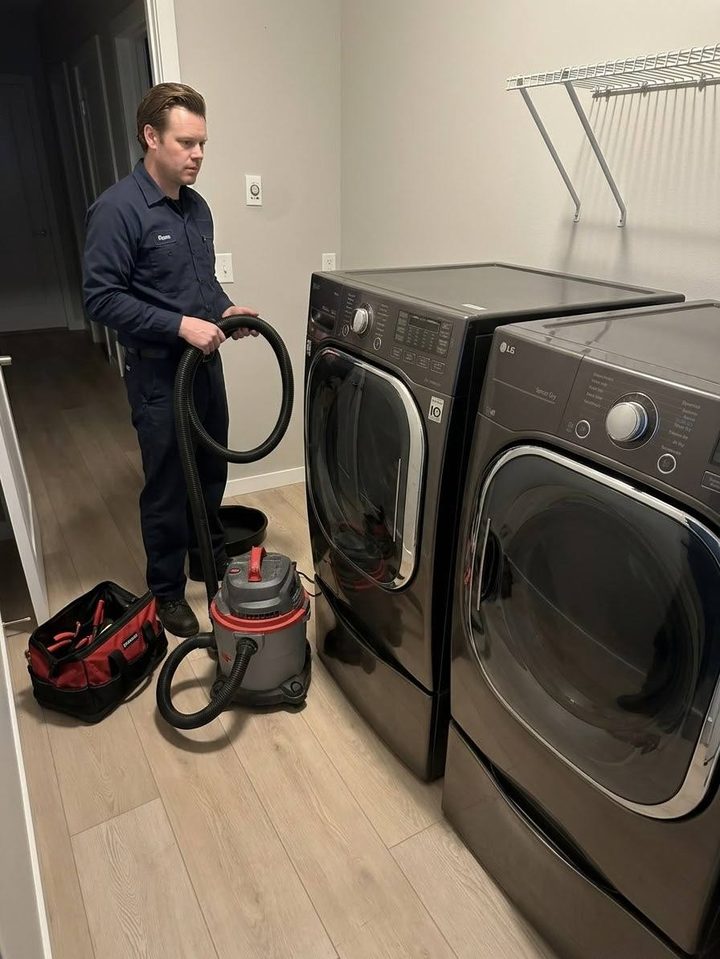
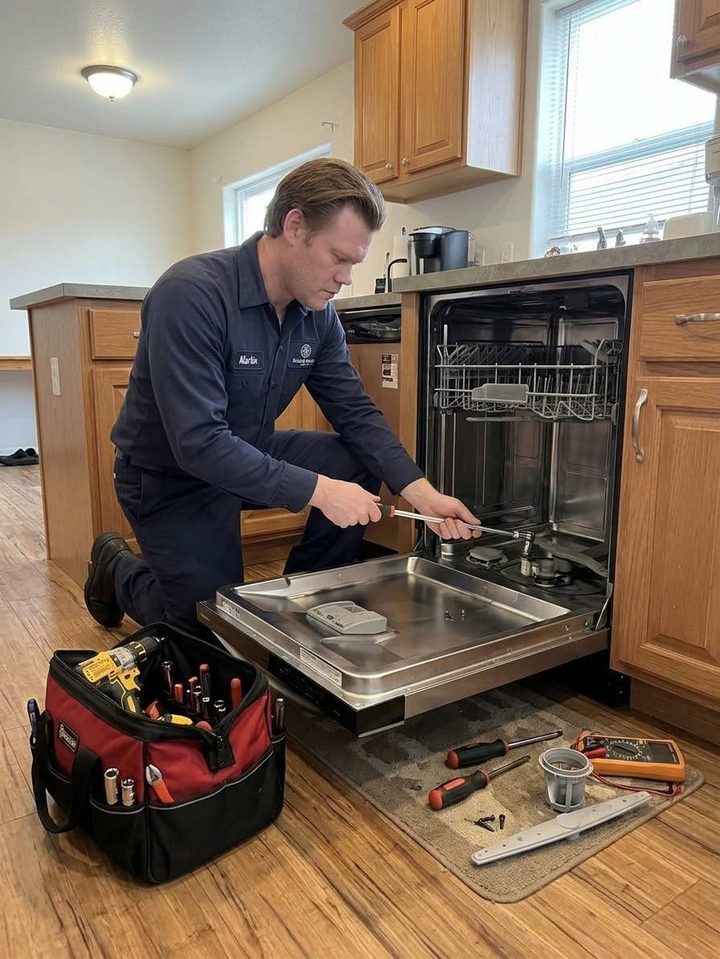
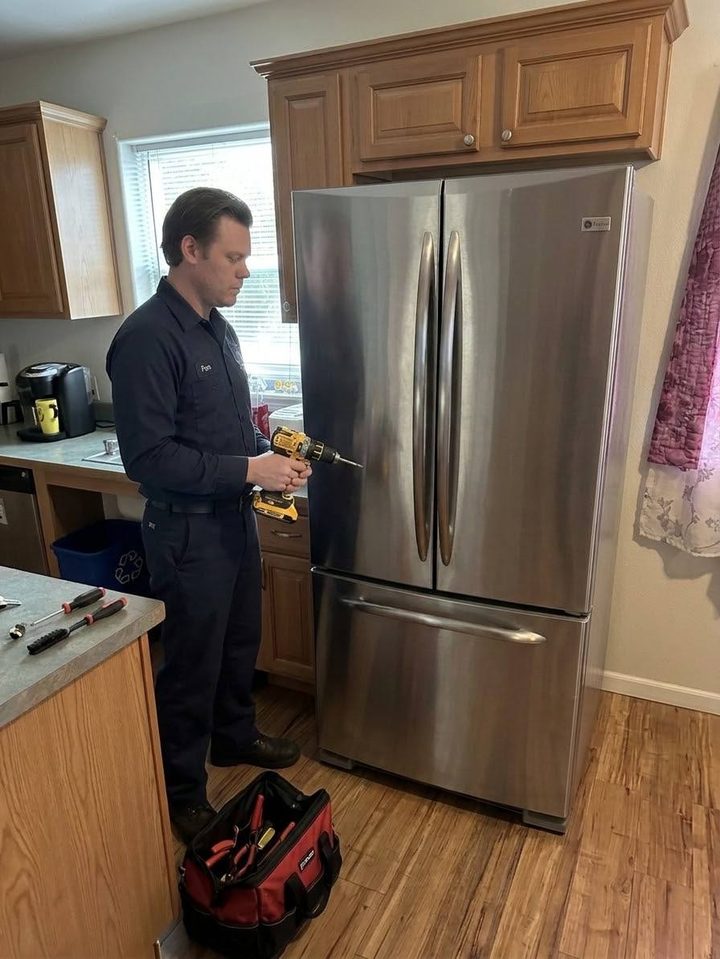
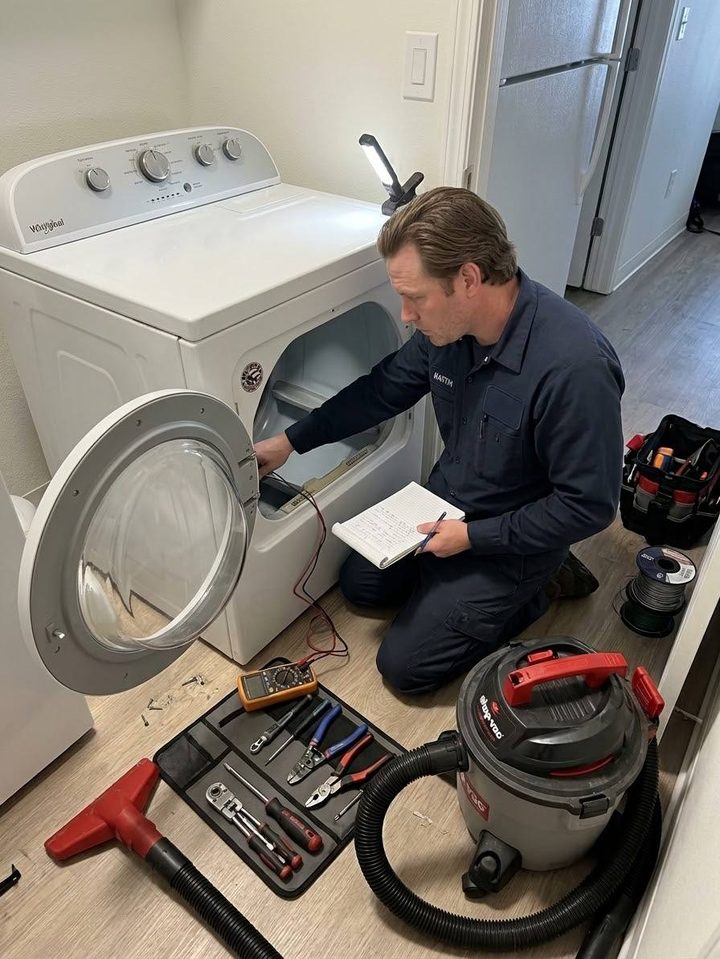
No stock imagery on order — the county's machines and the hands that service them.
Routine dryer calls ride the regular route — most of the county sees a window inside a few working days. Tell us the model from the door sticker and the van arrives already carrying the likely part.
Yes, on the appliance side: coils, igniters, flame sensors and the burner's behavior watched live. The meter, regulator and house piping belong to your gas utility or fitter, and the paperwork says so plainly whenever a reading points past the machine.
Cold thickens old lubricant and shrinks worn rollers, so winter mornings tattle on wear that summer hides. It's an honest early warning — rollers and glides cost far less before they take the belt with them.
Half the time it's the house side — a tired breaker or a failing receptacle — and the reading sorts that out before any dryer part is bought. If the fault is on the wall, you get a written referral to an electrician, not a parts order.
Usually — dryers are the simplest machines in the house, and most fail through inexpensive wear items. When the arithmetic says otherwise, the verdict comes in writing for $92 and you go shopping informed instead of guessing.
One call puts it on the route — the reading first, the posted figure holding throughout.