The kitchen's quietest worker fails through its diet more than its parts. The sump comes open first, from $242 — and a remarkable share of calls end with labor alone on the ticket.
Mon–Fri 8 AM – 6 PM · warranty on parts and workmanship, printed on the ticket
Most of this category's trouble pools in the sump — which is why the sump opens before any pump hears an accusation.
| What the House Reports | What the Reading Usually Shows |
|---|---|
| Water standing after every cycle | The sump's archive — seeds, labels, a blackberry stem — or a pump that genuinely fails the meter under load |
| Glasses gritty or filmed | Spray arms starved by debris, a filter overdue, or well-water minerals fogging honestly |
| Won't start, lights dark | Door latch, thermal fuse or a control that ate an outage — metered in that order |
| Sour smell between loads | Sump and filter housekeeping, then the drain loop under the sink checked for backwash |
| Stops mid-cycle and beeps | A code worth photographing — often a sensor or fill verdict readable before the visit |
| Leak tracing along the toe-kick | Boots, hoses and the door gasket traced with panels off — never guessed from above |

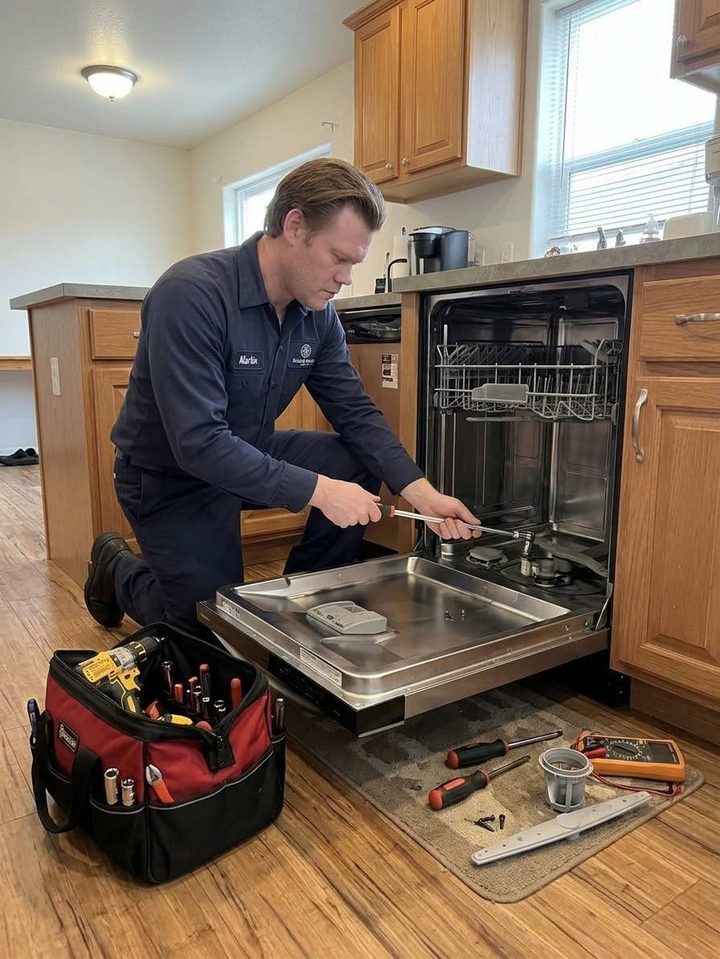
Dishwasher visits open at the bottom of the machine, where the truth pools. Farm-kitchen loads carry orchard pits, berry stems and label fragments into the sump's archive, and a thorough dig-out of the filter stack and chopper — labor already inside the posted figure — closes a remarkable share of calls with the hardware entry still blank. Only once the sump is emptied and proven clear do pumps, valves and switches face the meter, with control boards testifying last, strictly against evidence.
Two local checks ride every visit. Intake temperature gets read, because a machine drinking lukewarm supply cannot wash well no matter its health — a long-run plumbing quirk common in the county's older farmhouses. And on the well lanes, scale gets separated honestly from failure: a descaling is maintenance, priced like maintenance, and it will never wear a repair's name on your ticket. Findings that belong under the sink — a low drain loop inviting backwash, a tired air gap — leave as a plumber's referral, not a parts order.
From $242 covers the trip, the reading and all labor to a tested cycle. Pumps, latches, valves and elements print separately and wait for your signature; quiet-series machines young enough for factory coverage get flagged free before any fee exists. Ending at the verdict stays honest work: $92, complete.
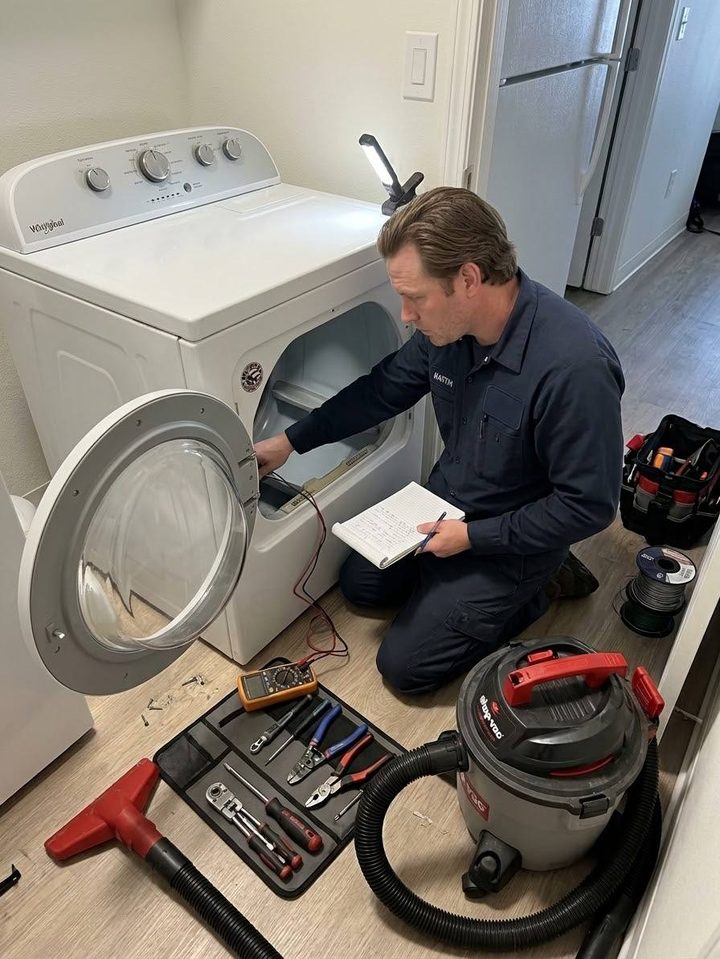
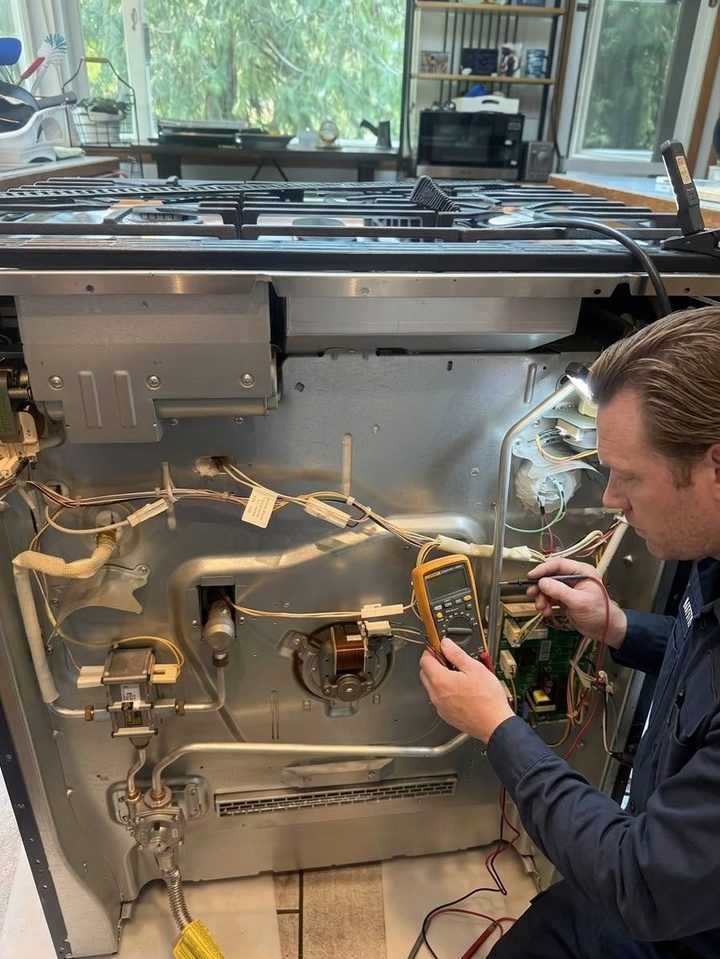
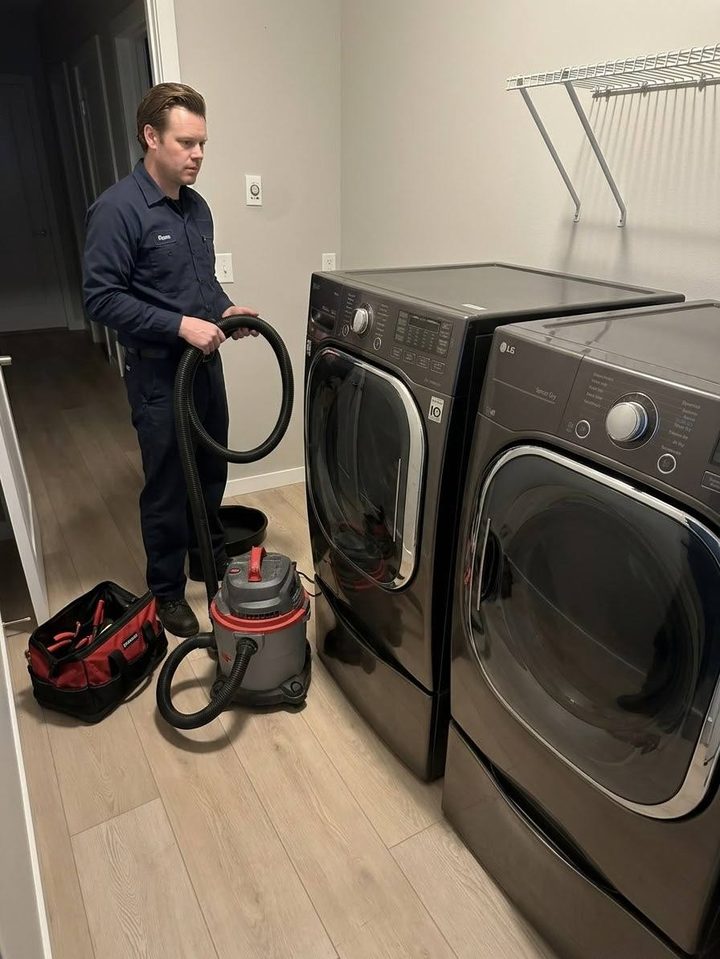
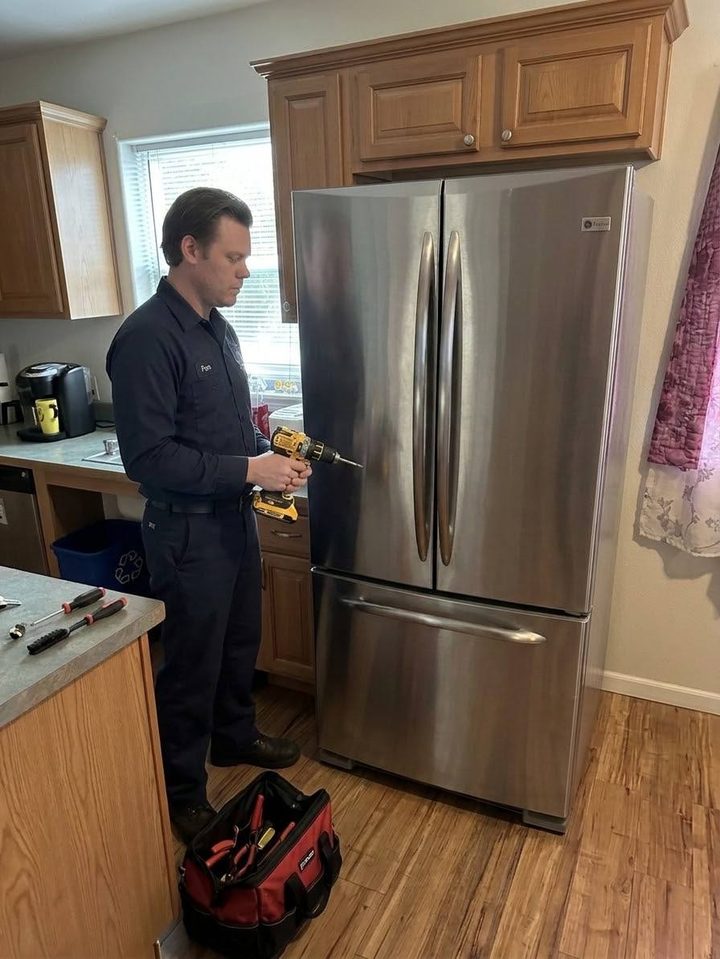
No stock imagery on order — the county's machines and the hands that service them.
As often as not the culprit is the sump's collection or a folded drain hose, cured with labor alone. A pump gets renewed here only once the sump is proven clear and the windings flunk their meter test.
On district water, usually a starved spray path — debris or a tired filter. On well water, often chemistry doing what chemistry does. The reading names which, and recommends filtration in writing when that's the honest answer.
Probably not — thermal fuses and controls eat surges. The good news: the surge casualties are mostly the cheap parts, and they're metered first on every post-outage call.
A sentence at booking, nothing more. Integrated and standard machines ride the same posted figure; the cabinetry just tells us what to bring.
Repair, usually: the failure modes are specific and documented, and replacements exist at sane prices. Young enough, the factory may still owe the fix — a model number over the phone settles that free of charge.
Book it — the machine opens from the bottom, and plenty of tickets close with no parts at all.